
Honey-DNA
City Bees with Refined Taste
What Our Honey's DNA Reveals About Vienna
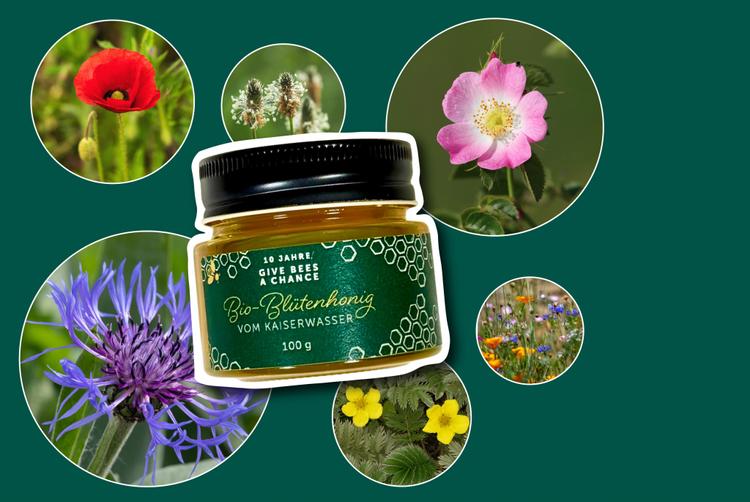
High above the rooftops of the ARCOTEL Kaiserwasser in Vienna, overlooking the Alte Donau, there is a busy hum. Here, on our hotel roof, several bee colonies make their home – and they produce something quite unlike anything else: our very own organic blossom honey from the ARCOTEL Kaiserwasser.
But where exactly do our bees gather their nectar? Rather than simply guessing, we had this question answered scientifically by the Austrian specialist laboratory "Sinsoma". Operating across Europe and a spin-off of the University of Innsbruck, the laboratory has been advancing DNA analysis in the fields of environment and health for 25 years, bringing research and practical application together. Universities, public authorities and globally active companies rely on its expertise – with the highest standards guaranteeing both process and result reliability.
The principle behind it is as simple as it is fascinating: every plant leaves tiny, unique traces of DNA in the honey. From just a few millilitres of honey, the laboratory can therefore determine precisely which blossoms our industrious workers actually visited. One might think of it as a genetic fingerprint of the landscape around the Kaiserwasser. Only closely related species – such as citrus plants – cannot always be told apart with certainty; the overall picture, however, is crystal clear. And it is nothing less than a quiet declaration of love for the Alte Donau recreation area.